
Western Fair Turns 10 Days of Fun into Lasting Environmental Impact
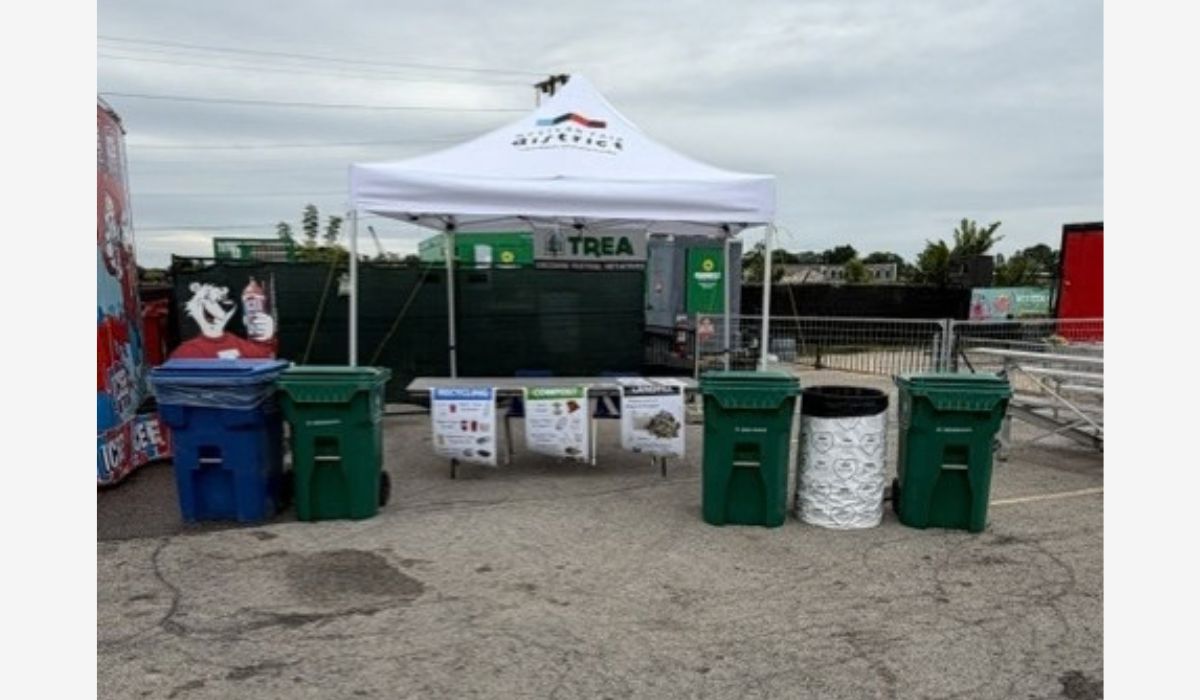
LONDON, ON – October 8 2026 – Two new environmental initiatives introduced at the 2026 Western Fair are showing how small changes across a large event can add up to a meaningful impact.
Over the 10 days of the Fair, new free chilled and filtered water stations dispensed more than six million millilitres of water, while a new green-waste diversion pilot collected more than 17,000 kilograms of food waste.
The initiatives were introduced as part of Western Fair Association’s ongoing effort to be more responsible with waste and find practical ways to reduce the environmental impact of its events. As a not-for-profit agricultural society, Western Fair Association also saw an opportunity to lead by example and build on green-waste practices already underway across its year-round operations.
The water stations dispensed 6,052,873 mL of water, the equivalent of approximately 12,105 500-mL plastic water bottles. Placed end to end, those bottles would stretch approximately 2.5 kilometres.
At the same time, the green-waste program collected 17,894 kg (39,450 pounds) of food waste, diverting material from the traditional waste stream so it could instead be composted and turned into nutrient-rich material.
The green-waste pilot was developed in partnership with the City of London, Waste Connections and the Thames Region Ecological Association (TREA).
“The Fair brings thousands of people together over 10 days, and with that comes an opportunity to think differently about the waste we create,” said Justin Fidler, Director of Project and Facilities. “We wanted to find practical ways to do better and make it easier for our guests to be part of it. This year showed us what is possible, and now we want to build on it.”
Building on what was already underway
Western Fair District has operated an onsite green-waste diversion program for several years, collecting compostable waste from across its year-round operations and turning it into fertilizer for use across the District.
The scale and complexity of the annual Fair, however, presented a bigger opportunity.
Previously, garbage and recycling bins were available throughout the Fair, while straw and some organic waste were handled separately offsite. For 2026, Western Fair wanted to take another step by capturing more food and compostable waste directly from the event.
Planning began during the summer with the City of London, Waste Connections and TREA. Waste Connections supplied collection containers, the City provided guidance based on experience with other festivals, and TREA was onsite during Fair weekends to help guests properly sort their waste, answer questions and build awareness of the program.
The pilot performed better than expected and provided valuable lessons for how the program can grow.
From a pilot to a bigger goal
The 2026 Fair was only the beginning.
Western Fair Association plans to meet with its partners to review the pilot and identify opportunities to improve and expand the program for the 150th Western Fair, September 10–19, 2027.
Plans being explored include expanding green-waste collection to weekdays, increasing the number of trained staff and adding more volunteers to help guests properly sort materials.
The goal for the 150th Fair is ambitious: divert 100,000 pounds of waste.
“As an agricultural organization, we understand that what happens to our waste matters,” said Justin Fidler, Director of Project and Facilities. “Our goal isn’t to introduce something once and call it a success. It’s to learn from what worked this year, improve it and see how much further we can go for our 150th.”
The free chilled water stations are also expected to return, building on a first year that demonstrated both strong guest use and the environmental benefit of making reusable bottles easier to refill.
For Western Fair Association, the initiatives are part of a broader commitment to finding practical ways its events and year-round operations can contribute positively to the community.
After nearly 150 years of bringing city and county together, the Western Fair is looking at not only how it celebrates agriculture and community, but how it can help care for the place we share.
About Western Fair Association
Western Fair Association is a year-round, not-for-profit agricultural organization dedicated to celebrating community and agriculture. Through events, entertainment, agriculture, food, sport and community initiatives, Western Fair District brings people together while reinvesting in programs and experiences that contribute to London and the surrounding region.
